An in-depth resource to help law firms navigate work comp prescription challenges, maintain continuity of care for clients, and strengthen coordination with providers, insurers, and pharmacy partners throughout the life of a claim.
Managing injured-worker prescriptions is one of the most time-consuming and unpredictable parts of workers’ compensation cases. At EZ Scripts Pharmacy, we partner with law firms to provide reliable, compliant, and uninterrupted medication support—so your team stays focused on advocacy, not administration.
This page provides a detailed overview of the services, processes, and safeguards we use to support your firm and your clients from start to finish.
Unlike retail pharmacies or PBM-controlled networks, EZ Scripts Pharmacy handles every step of the prescription process—from intake to insurance billing—with the specific needs of law firms and injured workers in mind.
Law firms rely on us because we provide:
Our goal is simple: make the prescription path the easiest part of your case.
You can submit a referral through our website, fax, email, or by calling our enrollment team.
We collect essential case details, treating provider information, and insurer contacts—nothing more than necessary to begin support.
We quickly verify claim details and begin prescription activation.
Our team coordinates directly with adjusters, insurers, or physician offices so your client doesn’t wait at a retail pharmacy or face PBM-controlled approval delays. We handle:
Your team does not have to chase these details.
Prescriptions ship via UPS My Choice with tracking, typically overnight.
FedEx and USPS options are available if preferred by the client.
Clients never need to visit a pharmacy or worry about stock shortages, long lines, or form rejections.
We stay with your client for the full life of the claim, regardless of:
Our priority is uninterrupted care—something typical retail pharmacies cannot guarantee.
Workers’ compensation claims often shift unexpectedly, especially when liability is questioned or insurers request additional reviews.
We ensure your client receives the medications they rely on during:
Our continued coverage reduces stress, avoids health setbacks, and helps protect case integrity by maintaining a stable treatment history.

We bill the insurance carrier directly for approved work comp medications.
Your client never pays upfront and never experiences retail pharmacy refusals tied to PBM contracts or preferred formularies.Lorem ipsum dolor sit amet, consectetur adipiscing elit. Ut elit tellus, luctus nec ullamcorper mattis, pulvinar dapibus leo.
PBMs (pharmacy benefit managers) often:
Our PBM-free approach avoids unnecessary roadblocks, giving your client:
We provide timely, organized documentation to support your case, including:
Everything is provided in a clean, professional format—ready for inclusion in your case files, demand letters, or hearing exhibits.
We understand that navigating a work injury is overwhelming.
Our patient support model focuses on clarity, compassion, and accessibility.
Your clients benefit from:
This not only improves recovery—it reflects positively on your firm’s client service.
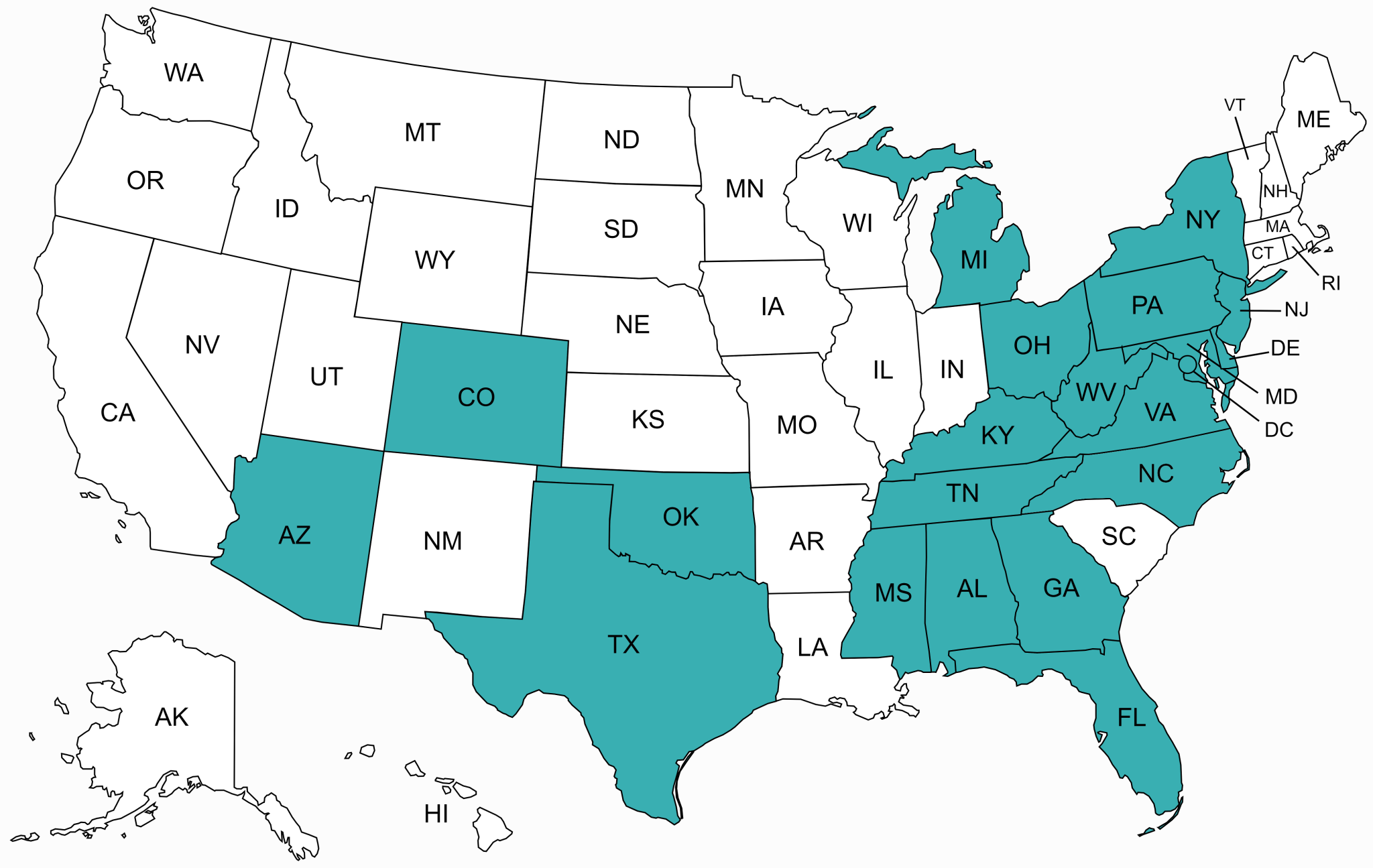
Licensed to operate in 21 U.S. states.
Coverage details and compliance information are available on our detailed support page.
Your clients’ private information is handled with strict adherence to all applicable regulations, including HIPAA and state pharmacy laws.
We maintain:
Our systems are built to keep sensitive information secure throughout every stage of your case.

Below are answers to common questions law firms encounter when managing workers’ compensation prescriptions and coordinating care for their clients. These insights are designed to help you navigate challenges more effectively and maintain continuity throughout the claim process.
When a claim is denied or under dispute, many traditional pharmacies may stop dispensing medications due to uncertainty around payment. This can interrupt treatment at a critical stage. In such situations, a specialized workers’ compensation pharmacy can help maintain continuity of care while the legal process progresses, ensuring the client’s recovery is not negatively impacted.
Prior authorizations can delay access to medications, as insurers may require additional clinical justification before approving certain drugs. This often leads to back-and-forth communication between providers and adjusters. These delays can affect recovery timelines and increase client frustration, especially when medications are time-sensitive.
Formularies define which medications are approved under a workers’ compensation plan. If a prescribed medication falls outside the formulary, it may be denied or require additional approvals. This can result in substitutions that may not always align with the provider’s original treatment plan, potentially affecting outcomes.
Yes, in many cases clients can switch pharmacies, especially if they are experiencing delays or access issues. However, the transition must be handled carefully to ensure prescription continuity, proper documentation transfer, and alignment with claim requirements. Law firms often play a key role in guiding clients through this process.
Timelines can vary depending on claim status, authorization requirements, and pharmacy processes. While some prescriptions may be filled the same day, others may face delays due to verification or approval steps. Faster coordination and direct communication between stakeholders can significantly improve turnaround times.
Clients often ask about delays in receiving medications, whether they need to pay out of pocket, why certain prescriptions are not approved, and how refills will be handled. Clear communication around these topics helps manage expectations and improves the overall client experience during the claim process.
Law firms may require medication histories, delivery confirmations, billing records, and communication logs related to prescription handling. These documents can support case timelines, demonstrate continuity of care, and assist during disputes or hearings where treatment consistency is relevant.
When a client relocates, maintaining consistent medication access can become more complex due to varying state regulations and pharmacy licensing requirements. A pharmacy partner with multi-state capabilities can help ensure uninterrupted service and proper coordination across jurisdictions.